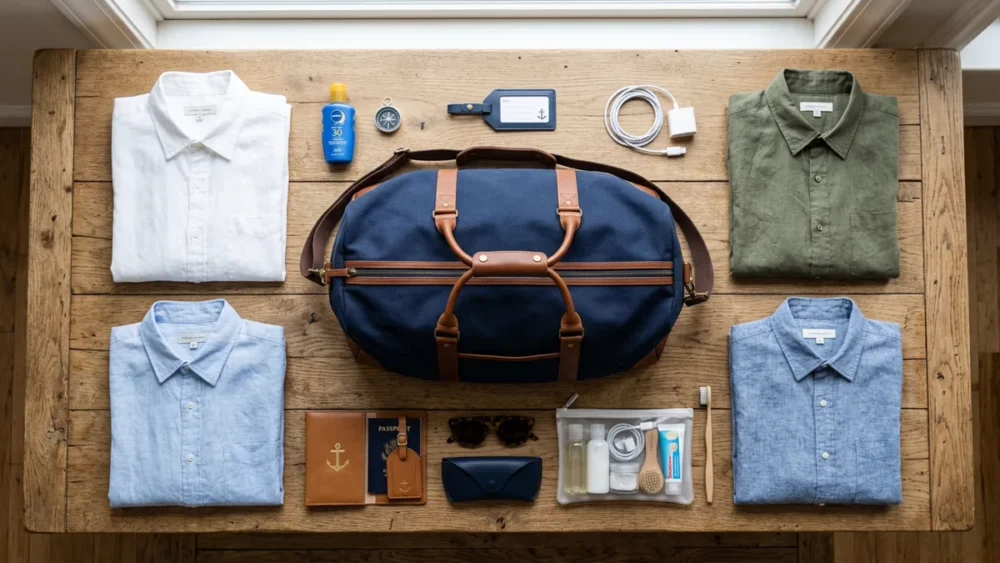
Boarding pass: A practical cruise packing list organizes gear by trip phase: keep embarkation-day essentials and documents in your carry-on, pack breathable layers for sea days, and verify prohibited items like irons before departure.
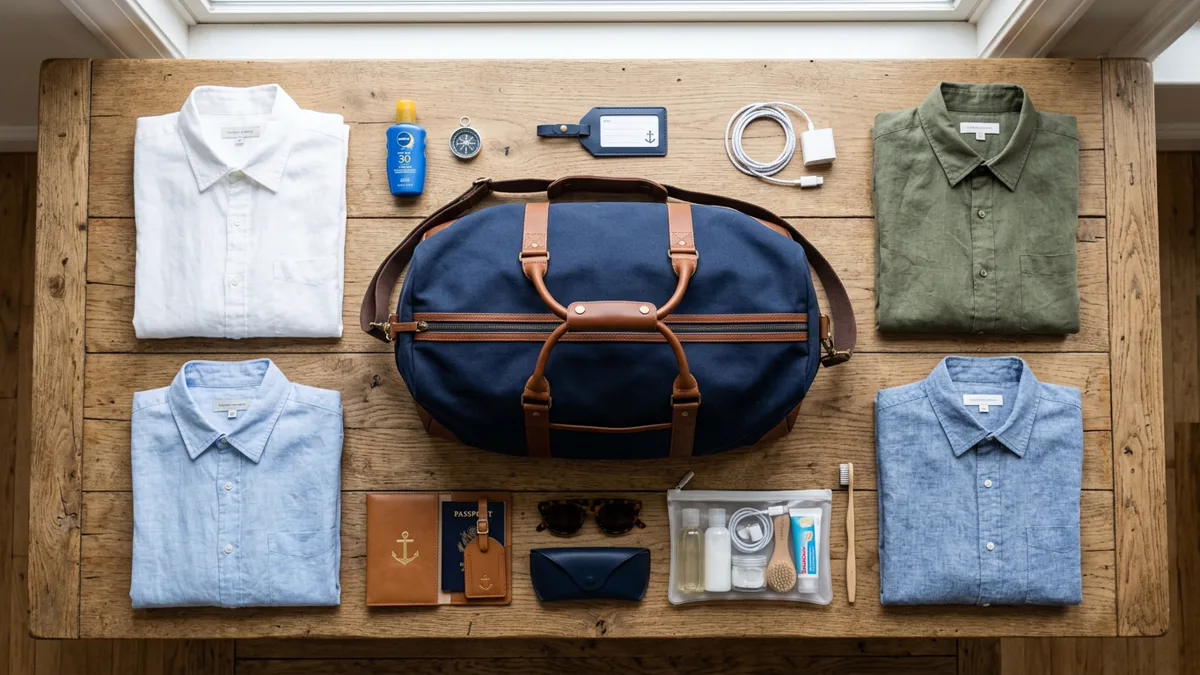
Packing for a cruise is different from packing for a standard hotel stay. On a cruise, your luggage travels with you between destinations, but your stateroom is your only home base for the entire itinerary. Because staterooms have finite floor space and specific safety rules, bringing the right items in the right bags makes the difference between an effortless voyage and a cramped cabin. Successful cruise preparation begins with the calendar and a clear understanding of how shipboard logistics work from embarkation through final disembarkation.
The core principle of cruise packing is phase-based organization. Rather than packing all clothing together in large suitcases, seasoned travelers separate items based on when and where they will be used. You need quick access to certain essentials the moment you arrive at the cruise terminal, while formal dining outfits and shore excursion gear can remain tucked away until needed later in the voyage. For more wardrobe tips and garment planning, explore our packing and outfits guide to coordinate your voyage seamlessly.
- Four Weeks Out: Luggage Assessment and Policy Check: Review stateroom dimensions, luggage allowances, and the cruise line prohibited items list (checked October 2026).
- Two Weeks Out: Wardrobe Coordination and Excursion Gear: Assemble daytime resort wear, formal night attire, water shoes, and reef-safe sunscreen.
- One Week Out: Travel Document and Prescription Organization: Place physical passports, boarding passes, medical prescriptions, and credit cards in a dedicated travel pouch.
- Two Days Out: Pack the Embarkation Carry-On Daypack: Pack medications, chargers, swimwear, and a change of clothes into your carry-on bag for boarding day.
- One Day Out: Pack Main Checked Luggage: Organize evening clothes and bulk items into suitcases, tagging each bag with official line luggage tags.
- Final Night at Sea: Staging for Disembarkation: Set main luggage outside your cabin door before midnight while keeping morning clothes in your daypack.
What Belongs in Your Cruise Carry-On Bag on Embarkation Day?
Your embarkation carry-on bag should hold all essential travel documents, prescription medications, valuable electronics, charging cords, and a fresh change of clothes with swimwear. Because checked luggage is delivered to staterooms over several hours after boarding, your carry-on keeps you fully comfortable and prepared throughout the first afternoon on board.
When you arrive at the cruise terminal, porters take your large checked bags to load them onto the vessel through shipboard security screening. It often takes until late afternoon or evening for those bags to arrive outside your stateroom door. If your swimwear, sunscreen, or daily prescription medications are locked inside checked luggage, you will spend your first sea day afternoon waiting in heavy travel clothes instead of relaxing on deck.
A standard carry on for cruise embarkation should be a durable backpack or compact weekender duffel that fits easily through terminal X-ray scanners. In this bag, keep government-issued photo identification or passports, printed boarding passes, mobile boarding QR codes, wallet, jewelry, camera gear, and any essential prescription drugs in their original pharmacy containers. Adding a lightweight shirt, sandals, sunglasses, and a swimsuit lets you change immediately in a poolside restroom and begin enjoying the ship amenities without delay.
- Government identification: Physical passport and official laminated driver’s license.
- Digital and paper boarding documents: Printed cruise contract, luggage tags, and digital boarding passes.
- Personal medications: A full 14-day supply of daily prescriptions kept in original labeled bottles.
- Power essentials: Portable power bank, high-speed charging cables, and non-surge wall adapters.
- First-day pool kit: Swimsuit, breathable cover-up, UV sunglasses, and reef-safe sunscreen.
Clothing and Gear Needed for Sea Days and Port Excursions
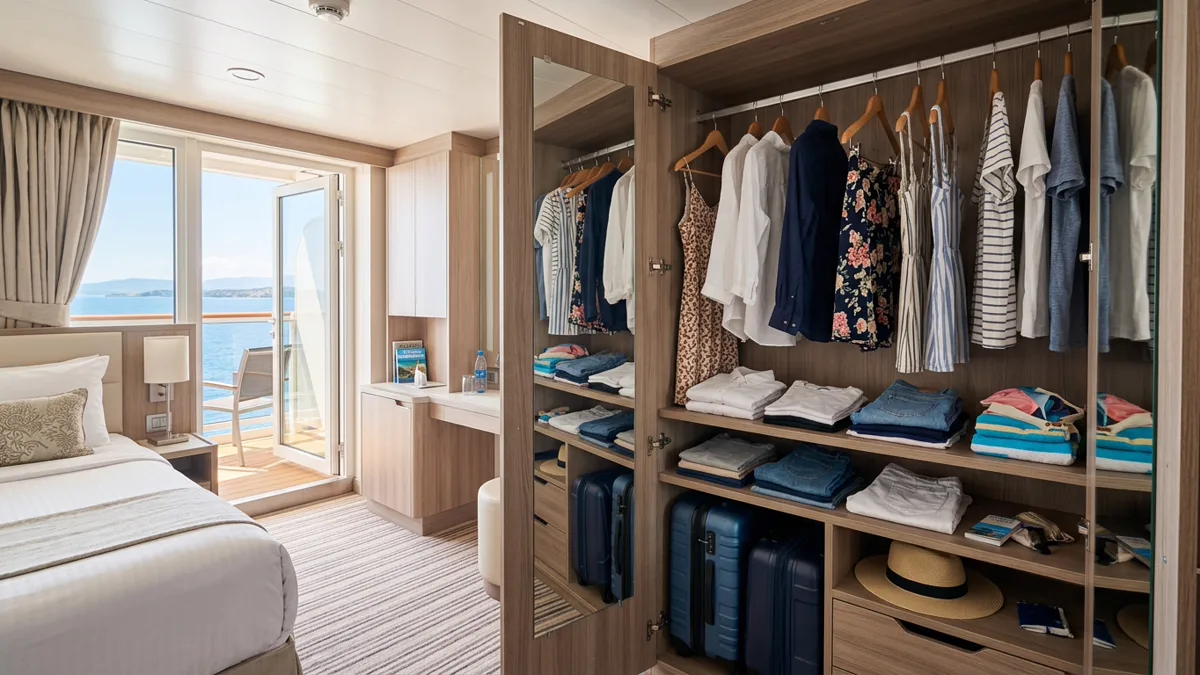
When deciding what to pack for a cruise, balance lightweight, breathable fabrics for daytime outdoor decks with structured layers for air-conditioned indoor lounges and dressier dining venues. Shore excursions require specialized functional gear such as water shoes, dry bags, and sun protection tailored to your destination ports.
Daytime life on a cruise ship is relaxed and centered around outdoor lidos, walking tracks, and casual buffet dining. Lightweight cotton, linen, and moisture-wicking synthetic fabrics perform best in warm climates. For sea days, pack two to three swimsuits so that one can dry while another is in use. Cruise cabin bathrooms feature limited air circulation, so alternating swimwear prevents damp clothing buildup. Pair swimsuits with breathable cover-ups, as all major cruise lines require shirts and footwear when walking through indoor public areas, elevators, and casual dining rooms.
Evening dining introduces different dress codes depending on the venue and the cruise line. Most standard evenings call for smart casual attire, such as collared polo shirts, chinos, sundresses, or blouses. For scheduled formal nights or elegant evenings, contemporary cruise lines like Royal Caribbean and Carnival recommend dress shirts, slacks, cocktail dresses, or blazers rather than formal black-tie tuxedos. Bring a light cardigan, sweater, or blazer, because indoor dining rooms and theater lounges maintain cool air conditioning regardless of the outdoor tropical heat.
Port days demand specific excursion equipment. A packable dry bag or lightweight water-resistant backpack protects your phone and towel during tender boat transfers or beach excursions. Pack water shoes with sturdy rubber soles for rocky coastlines, snorkeling tours, or waterfall hikes where standard flip-flops risk slipping. Always carry mineral-based reef-safe sunscreen to comply with local environmental protection regulations across Caribbean destinations as documented by maritime industry guidelines.
What Items Are Strictly Prohibited on a Cruise Ship?
Knowing what not to pack on a cruise prevents security delays and confiscation at the cruise terminal. Prohibited cabin items include clothes irons, garment steamers, heating pads, candles, surge-protected power strips, weapons, and illegal substances as mandated by maritime safety regulations (checked October 2026).
Fire prevention is the single highest safety priority aboard any passenger vessel. Shipboard electrical distribution operates on an isolated delta wiring configuration without a traditional earth ground. Standard household surge protectors can fail under this ungrounded configuration, generating excess heat and creating severe fire risks. Cruise lines strictly prohibit surge-protected power strips; instead, travelers should bring non-surge multi-port USB charging hubs or manufacturer-approved multi-plug adapters that lack surge suppression circuitry per shipboard passenger safety rules.
Heat-producing appliances such as clothes irons, travel steamers, hot plates, and immersion heaters are universally banned from staterooms. If your clothing wrinkles in transit, cruise ships offer professional laundry and pressing services for a fee, while some lines provide self-service launderettes equipped with safety-monitored irons. In addition, personal drones, hoverboards, CBD products, and large quantities of alcohol outside the line specific carry-on allowance will be confiscated at port security checkpoints.
How to Maximize Stateroom Space and Cabin Luggage Storage
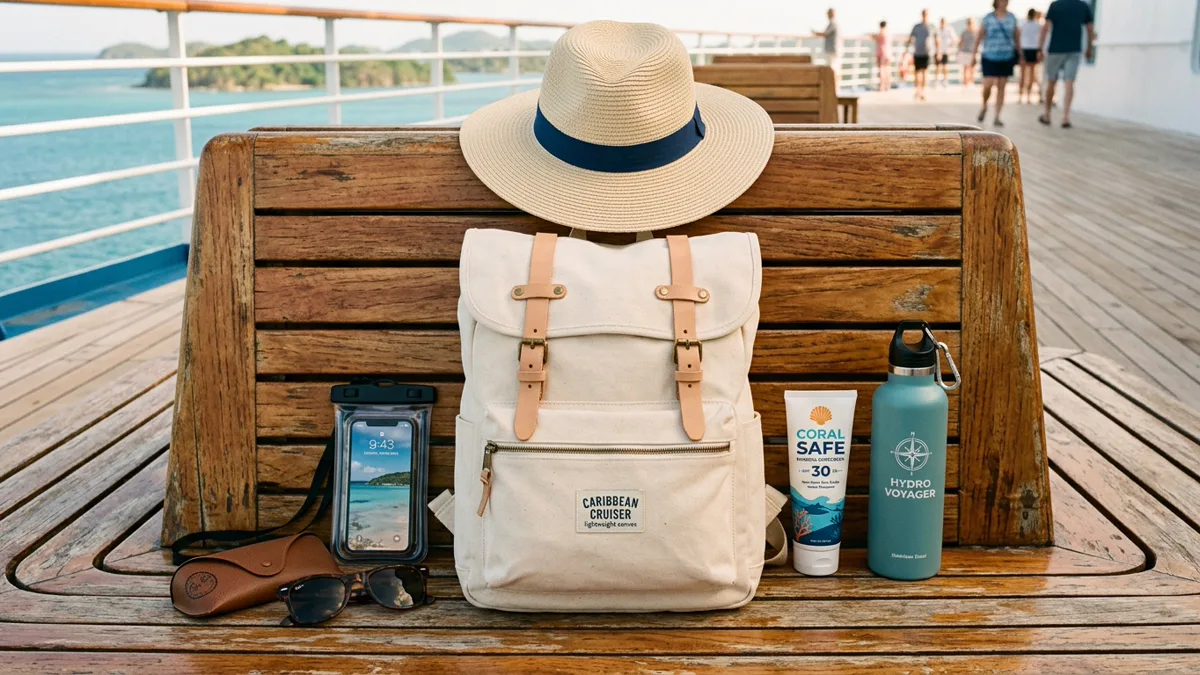
To maximize stateroom space, unpack completely on embarkation day, nest empty suitcases inside each other to store under the bed, and utilize heavy-duty magnetic hooks on metal stateroom walls. This keeps cabin walkways clear and keeps all daily essentials organized throughout your voyage.
Cruise ship stateroom partition walls and ceilings are constructed from heavy-gauge steel covered with decorative vinyl veneer. This magnetic architecture allows you to attach strong neodymium magnetic hooks to walls to hang hats, daypacks, light jackets, lanyards, and wet gear without leaving marks or damaging surfaces. Magnetic hooks rated for 25 to 40 pounds of vertical pull strength provide practical vertical storage in compact cabins.
Bed frames in cruise staterooms are intentionally elevated above the carpeted floor to accommodate standard luggage. As soon as your checked bags arrive, unpack your clothing into closet hangers and built-in vanity drawers. Open your smaller carry-on bag, place it inside your larger checked suitcase, and slide the nested luggage under the bed. Storing empty bags beneath the bed frees up valuable closet floor space and eliminates clutter in living areas.
Cruise Packing List by Trip Phase and Luggage Categories
Organizing your cruise packing list by journey phase ensures that you have the right gear available at every stage of the itinerary without overpacking unnecessary baggage. Use the reference table below to plan your bags before departure.
| Trip Phase | Recommended Luggage | Essential Items to Include | Key Objective |
|---|---|---|---|
| Embarkation Day | Personal Daypack / Carry-On | Passports, boarding passes, wallet, daily medications, swimwear, phone charger | Immediate access before checked bags arrive at cabin |
| Sea Days on Deck | Main Stateroom Wardrobe | 2 to 3 swimsuits, UV rash guards, sunglasses, wide-brim hat, flip-flops, light cover-up | Sun protection and casual poolside comfort |
| Port Excursions | Packable Dry Bag / Daypack | Reef-safe sunscreen, water shoes, microfiber towel, portable power bank, photo ID | Mobility and gear protection ashore |
| Evening Dining | Closet Hanging Section | Collared shirts, chinos, sundresses, blazer, cardigan, closed-toe walking shoes | Compliance with shipboard dining dress codes |
| Disembarkation | Staging Overnight Bag | Disembarkation documents, keys, change of clothes for travel day, toiletries | Smooth terminal exit after checking main bags overnight |
Source: Cruise Lines International Association (CLIA) and major cruise line guest policies, checked October 2026.
Common Myths About Cruise Packing
Many first-time cruisers pack based on outdated travel advice or misconceptions about shipboard life. The table below clarifies common cruise packing myths with factual operational realities.
| Myth | Fact |
|---|---|
| You should bring a household surge protector for extra cabin outlets. | Surge protectors are strictly prohibited on ships because ungrounded marine wiring causes surge suppression components to overheat and present severe fire risks. Use non-surge USB hubs instead. |
| You must pack a formal tuxedo or evening ballgown for dinner. | Contemporary cruise lines have relaxed their evening dress guidelines; dress shirts, slacks, cocktail dresses, or blazers meet formal night requirements on almost all mainstream ships. |
| You can carry a small travel clothes steamer in your checked bag. | All garment steamers and travel irons are confiscated at boarding security as fire hazards. Ships provide onboard pressing services or self-service laundry rooms. |
| You need a distinct outfit for every single day and evening of the cruise. | Stateroom closets have limited hanging space. Mixing and matching neutral basics, breathable layers, and versatile accessories minimizes luggage weight while covering all activities. |
Deck-chair questions
How many bags are you allowed to bring on a cruise?
Most major cruise lines do not impose strict baggage weight limits like airlines, but they recommend bringing no more than two checked bags and one carry-on per passenger. All luggage must fit comfortably inside your stateroom without obstructing safety pathways or cabin doorways.
Can I bring my own bottled water or wine on board?
Policies vary by cruise line. Many lines allow one sealed 750ml bottle of wine or champagne per adult in your carry-on luggage on embarkation day, but prohibit hard liquor and beer. Canned non-alcoholic beverages are permitted under specific quantity limits depending on the line (checked October 2026).
Do cruise cabins provide shampoo, soap, and hairdryers?
Yes, cruise staterooms are equipped with built-in wall hairdryers and complimentary body wash and shampoo dispensers in the bathroom. However, if you prefer specialized hair care formulas, conditioner, or higher-wattage salon styling tools, you should pack travel-sized bottles and your own styling wand.
What type of power outlet adapters do cruise cabins have?
Modern cruise cabins typically provide a combination of standard North American 110V outlets and European 220V round two-prong sockets, along with USB-A or USB-C charging ports. Bringing a basic European plug adapter expands your available charging options without requiring bulky power strips.
Where do I store my physical passport and valuables during the voyage?
Every stateroom includes a complimentary digital electronic safe located inside the closet or vanity cabinet. Store your physical passport, excess cash, jewelry, and travel insurance documents inside the safe immediately upon entering your cabin, carrying a photocopy or government photo ID ashore.
How we researched this: Seasons, document rules and policies are checked against cruise lines and government agencies own pages, the only versions that stay current. An AI model helped assemble the draft, and the editor rebuilt it into a practical plan.
Sources: Cruise Lines International Association (CLIA), Royal Caribbean Prohibited Items List, Carnival Cruise Line Guest Policies.