

Boarding pass: Preventing seasickness on a cruise relies on selecting lower-deck midship staterooms near the vessel center of gravity, spending time on open promenade decks gazing at the true horizon, and staying well-hydrated. Modern mega-ships utilize computer-controlled hydraulic stabilizer fins to eliminate up to 85 percent of roll motion.

One of the most frequent hesitations among prospective ocean travelers is the concern over motion discomfort. Experiencing seasickness on a cruise can feel intimidating before your maiden voyage. However, modern commercial cruise liners are massive engineering marvels equipped with active stabilization systems that deliver remarkably smooth sailing across open ocean lanes. Understanding how ship motion occurs and implementing proven behavioral adjustments prevents discomfort before it starts.
According to maritime travel health research published in the CDC Health Information for International Travel (Yellow Book), cruise ship motion sickness arises when the inner ear vestibular system detects physical wave movement while the eyes perceive a stationary room interior. Reconciling this sensory mismatch by looking out at the distant horizon, breathing fresh sea air, and selecting stable cabin locations restores equilibrium quickly. Consult our cruise planning section, review our best cabin on a cruise ship guide, and explore our first time cruise preparation guide to set sail with complete confidence.
- Select Midship Staterooms: Book lower-deck central cabins where hull rotation and pitch displacement are minimal.
- Focus on the Horizon: Spend time on open outdoor promenade decks to align visual and vestibular sensory inputs.
- Stay in Fresh Air: Step outside into cool ocean breezes rather than remaining in closed interior spaces during swells.
- Consult Health Professionals: Speak with a licensed doctor or pharmacist prior to sailing for personalized preventive advice.
Why Does Motion Discomfort Occur During Open Water Sailing?
Motion sensitivity is a normal physiological response to unfamiliar motion patterns. Inside the human inner ear, fluid-filled semicircular canals and otolith organs track three-dimensional movement, gravitational pull, and spatial orientation. When you sit inside an enclosed shipboard lounge or windowless stateroom during open-sea transits, your inner ear registers the gentle rise and fall of ocean swells.
However, because the walls, floor, and furniture around you appear completely motionless, your eyes signal to the brain that you are resting on solid ground. This conflicting neurological data creates a temporary sensory disconnect. The brain interprets this sensory clash as a neurological disturbance, triggering common motion symptoms such as mild lethargy, cold sweats, and nausea.
Resolving this physiological disconnect is straightforward. By stepping outside onto an open deck and looking toward the fixed horizontal line where the sky meets the ocean, your visual cortex immediately registers real-time movement, realigning your visual and vestibular systems and quelling symptoms naturally.
- Sensory conflict: Vestibular inner ear registers motion while visual cues signal stillness.
- Physiological trigger: Disconnect between visual sightlines and gravitational balance centers.
- Natural remedy: Viewing the distant horizon line instantly synchronizes spatial inputs.
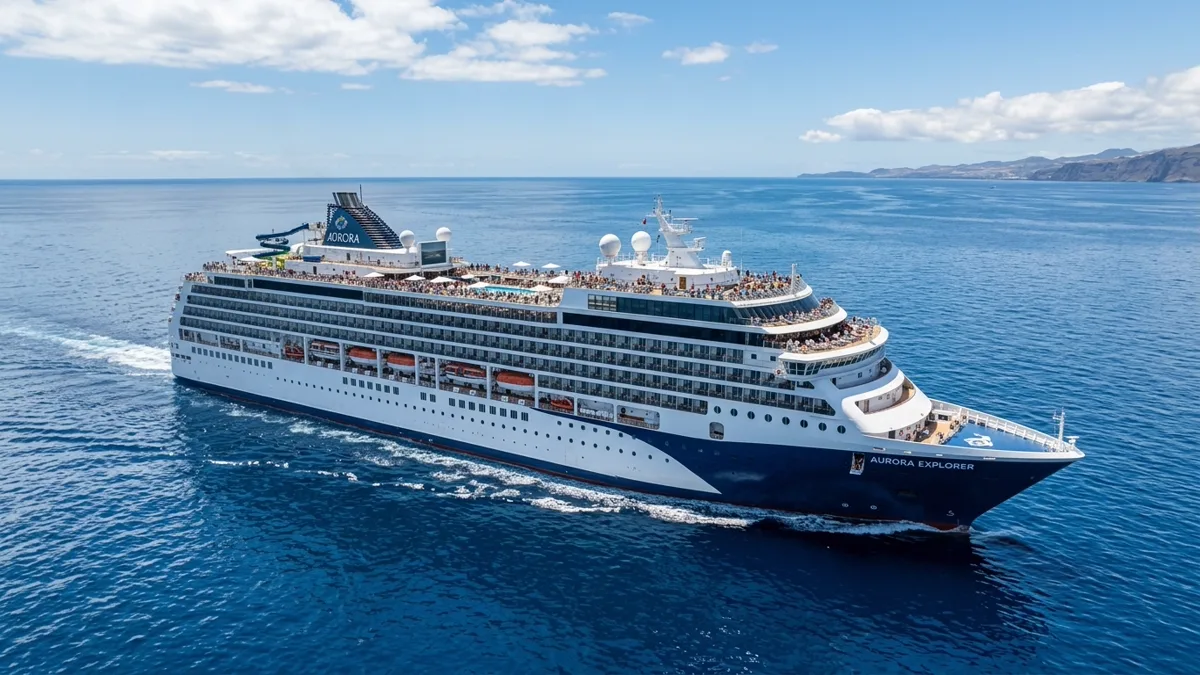
How Modern Cruise Ship Stabilizer Fins Reduce Wave Rolling
Modern cruise vessels bear little resemblance to historical ocean steamships that rolled heavily in rough seas. Today’s commercial passenger ships weigh between 70,000 and 230,000 gross registered tons, providing enormous physical inertia and displacement that dampens wave energy naturally.
Beneath the waterline, modern ships employ active computer-controlled hydraulic stabilizer fins. Extending outward 15 to 25 feet from both sides of the central hull like underwater wings, these gyroscopically controlled fins tilt dynamically against incoming wave forces. As a wave attempts to push the ship starboard, the starboard fin angles upward while the port fin angles downward, generating dynamic hydrodynamic lift that counteracts roll motion by 80 to 85 percent.
Also, modern bridge navigation teams utilize satellite oceanographic modeling and marine weather radar to adjust transit speeds and routes around severe open-sea storm fronts, ensuring the vast majority of cruise days feature exceptionally calm, smooth navigation.
Which Stateroom Locations Minimize Physical Movement on Ocean Waves?
Where you sleep and rest aboard the vessel significantly influences how much motion your body absorbs. A cruise ship functions as a large floating lever, rotating around a central point known as the center of gravity.
Staterooms located midship on lower or middle passenger decks (Decks 3 through 6) experience the smallest physical displacement. When the bow rises ten feet over an oncoming swell, the midsection of the vessel barely rises two feet. Selecting a cabin centered between the bow and stern, and positioned low in the hull superstructure, provides the most motionless resting environment on the vessel.
Conversely, high-tier penthouse suites positioned high on Deck 14 or forward bow staterooms experience exaggerated vertical movement during open-ocean transits. If motion sensitivity is a primary concern, prioritizing a midship stateroom location is far more beneficial than upgrading to top-deck suites.
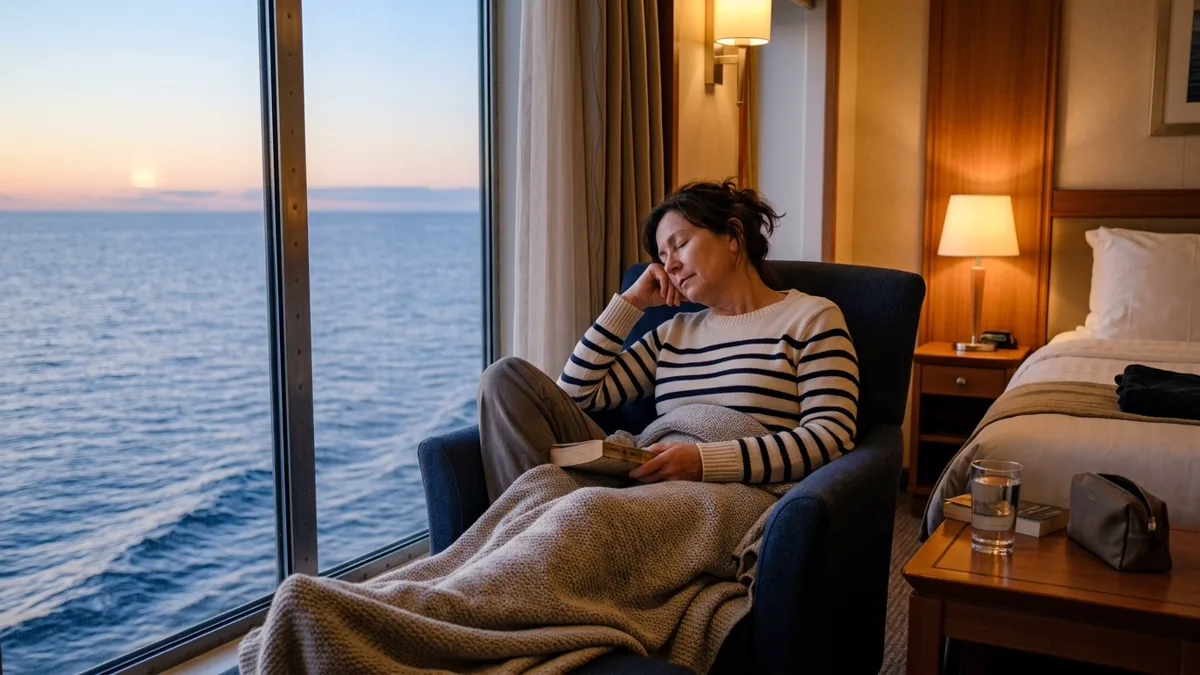
What Behavioral Habits Help Travelers Prevent Seasickness on a Cruise?
Adopting simple daily routines aboard the ship prevents motion symptoms before they manifest. Implementing proactive habits keeps your digestive and balance systems stable throughout the voyage.
Maintain consistent hydration by drinking plenty of fresh water throughout sea days. Dehydration exacerbates fatigue and dizziness. Avoid skipping meals, as an empty stomach is significantly more sensitive to motion disturbances; eat light, balanced meals featuring simple carbohydrates like green apples, plain crackers, oatmeal, and ginger tea, which soothe the gastric lining naturally.
When choosing where to spend daytime hours during open-water sailings, spend time along the outdoor promenade deck (typically Deck 5 or Deck 7) rather than enclosed upper-deck lounges. For travelers seeking medical remedies, speak with a qualified physician or pharmacist several weeks before departure to obtain appropriate preventive medications or acupressure bands tailored to your personal health history.
Cruise Ship Motion Factors and Mitigation Matrix
To assist in your voyage preparation, this reference table outlines primary motion factors, how modern ships mitigate movement, and the optimal choices for sensitive travelers.
| Operational Factor | Shipboard Motion Impact | Naval / Engineering Mitigation | Recommended Traveler Action |
|---|---|---|---|
| Stateroom Deck Position | Upper decks experience amplified lateral roll | Hull stabilization fins center on lower hull | Book midship cabins on Decks 3 to 6. |
| Longitudinal Position | Bow and stern experience vertical pitching | Bulbous bow designs cut through waves | Avoid extreme forward or aft cabins. |
| Visual Sightlines | Enclosed interior spaces trigger sensory clash | Open promenade decks provide 360-degree views | Step outdoors to look at the true horizon. |
| Ship Gross Tonnage | Small yachts move more in open swells | Mega-ships (100k+ GT) absorb wave energy | Choose modern large-scale passenger liners. |
| Itinerary Route Type | Open Atlantic crossings have longer swells | Protected island chains break ocean swells | Select Western or Southern Caribbean routes. |
Common Motion Discomfort Misconceptions and Naval Truths
Many first-time cruisers let unwarranted fears of motion sickness deter them from sailing. Examining how modern vessels operate dispels common concerns.
Misconception: Everyone who sails on a cruise ship eventually experiences severe motion sickness.
Naval Truth: The vast majority of cruise passengers never experience noticeable motion discomfort. Between massive hull displacement, computer-controlled stabilizer fins, and sheltered itinerary channels, most travelers report that ship movement is barely perceptible during normal weather.
Misconception: Staying inside a dark stateroom with your eyes closed is the best way to recover from motion sensitivity.
Naval Truth: Lying in an enclosed room without visual horizon cues often prolongs sensory mismatch. Moving to an open-air central deck where you can feel fresh air and view the horizon helps your nervous system recalibrate far faster.
How we researched this: Our maritime comfort evaluations combine epidemiological motion studies from the CDC Yellow Book on travel medicine, naval architecture hydrodynamic stabilization papers, cruise ship medical department logs, and verified passenger feedback to deliver safe, practical travel advice.
Common Inquiries on Cruise Ship Motion Discomfort
Can you feel the cruise ship moving during dinner or shows?
Under standard Caribbean sea conditions, shipboard movement feels like a very gentle, subtle vibration rather than an active sway. In large public dining rooms and multi-deck theaters, passengers generally forget the vessel is in motion.
Are medical facilities and motion remedies available aboard the ship?
Every commercial passenger vessel features a fully staffed medical center with licensed physicians and nurses. Complimentary motion sickness tablets are frequently available at the guest services desk or stateroom services station upon request.
Does reading or using a smartphone worsen seasickness on a cruise?
Yes. Focusing on a static book, phone screen, or tablet while the vessel is in motion intensifies the sensory mismatch between your eyes and inner ear. Look up toward the ocean horizon whenever you feel mild dizziness.
Do acupressure wristbands work for cruise ship motion sickness?
Many travelers find relief using elastic acupressure wristbands that apply gentle pressure to the P6 (Neiguan) acupressure point on the inner wrist. They provide a drug-free alternative that can be worn continuously throughout the sailing.