
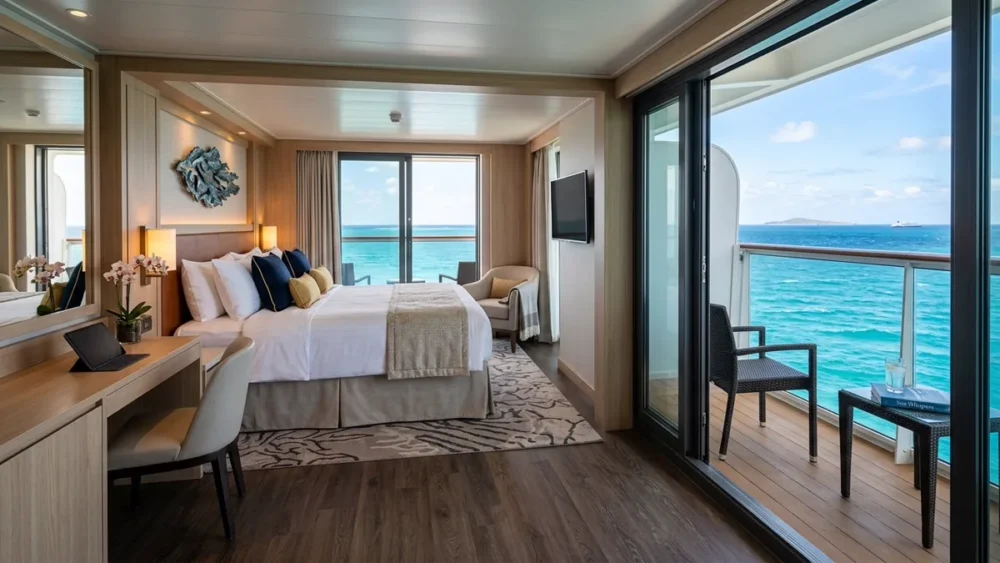
Boarding pass: Finding the best cabin on a cruise ship depends on your personal priorities: midship staterooms on lower decks provide the most stable ride for motion-sensitive travelers, balcony cabins offer private ocean views and fresh air, while inside cabins deliver exceptional budget value. Avoid staterooms positioned directly beneath pool decks or above entertainment lounges.
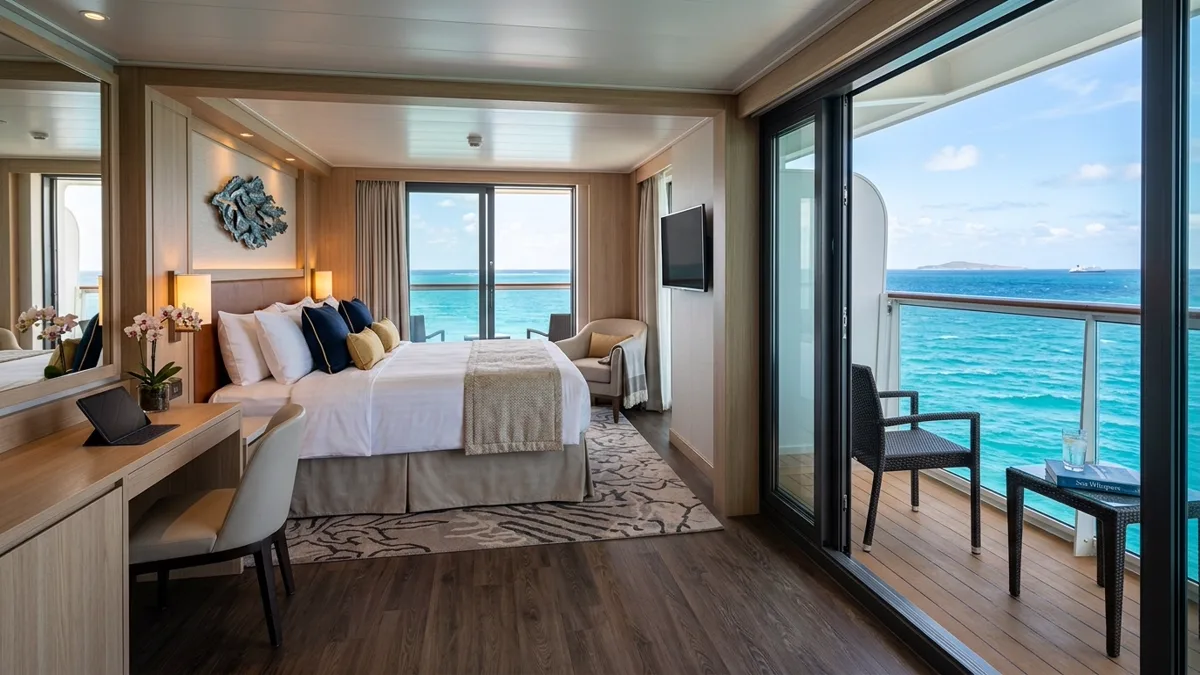
Your stateroom serves as your private floating sanctuary throughout an ocean voyage. While passengers spend waking hours exploring tropical ports, lounging by sun decks, and attending evening theater shows, returning to a comfortable, quiet stateroom ensures restful sleep. Determining the best cabin on a cruise ship requires evaluating stateroom layout categories, shipboard deck placement, noise proximity, and fare structures. Choosing wisely transforms your entire vacation comfort.
Modern naval architecture divides passenger accommodations into distinct cruise ship cabin categories, ranging from cost-effective inside staterooms to expansive multi-room suites with dedicated concierge service. An inside cabin cruise booking represents the most economical pathway onto modern mega-ships, freeing up vacation funds for shore excursions and specialty dining. Conversely, travelers seeking natural sunlight and private ocean breezes gravitate toward oceanview and balcony staterooms. Meanwhile, booking a flexible guarantee cabin fare provides an intriguing trade-off between discounted pricing and stateroom assignment control. Explore our cruise planning section, review our first time cruise preparation guide, and consult our cabin packing checklist before securing your stateroom reservation.
- Inside Staterooms: Windowless rooms providing dark, quiet sleeping environments at entry-level pricing.
- Oceanview Cabins: Feature picture windows or portholes for natural daylight without outdoor access.
- Balcony Verandas: Provide private outdoor seating, floor-to-ceiling glass doors, and panoramic sea views.
- Deck Placement: Select midship, lower-to-middle passenger decks to minimize wave motion and rolling.
How Do the Four Primary Stateroom Categories Compare?
Modern passenger vessels offer four fundamental stateroom classifications designed to accommodate varying budgets and group sizes. Understanding what each tier provides helps travelers select the ideal room layout.
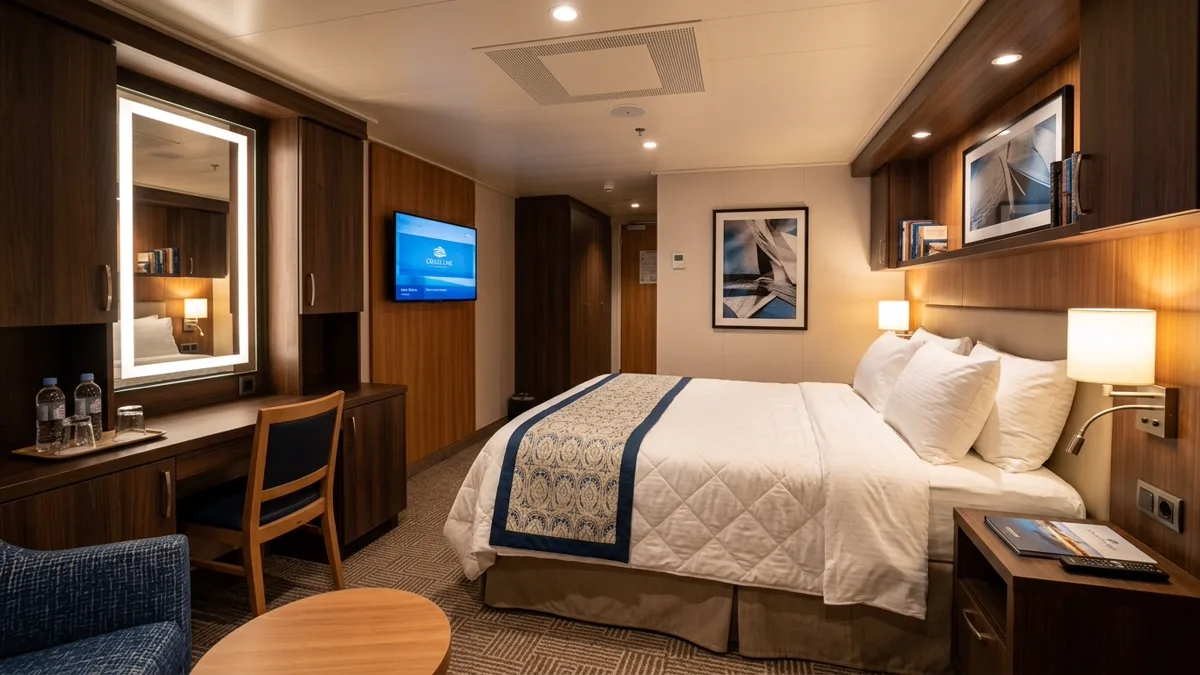
Inside cabins represent the standard entry point. Situated along interior corridors without exterior windows, these rooms typically range from 140 to 180 square feet. They appeal strongly to budget-focused cruisers, solo travelers, and active guests who view their stateroom strictly as a place to shower and sleep. Many contemporary ships feature innovative virtual balconies, using high-definition LED screens that stream real-time ocean views from external bow and stern cameras.
Oceanview staterooms add natural daylight through sealed portholes or large picture windows. Positioned along the outer hull on lower decks, oceanview rooms offer visual awareness of arrival ports and weather conditions without the cost of a private veranda. They serve as an excellent compromise for travelers who dislike windowless spaces but want to manage overall vacation spending.
Balcony staterooms represent the most popular category across contemporary cruise fleets. Measuring between 180 and 220 square feet of interior space, plus 40 to 60 square feet of private veranda, balcony cabins allow you to enjoy morning room-service coffee or evening sunsets in total privacy. Suites represent the pinnacle tier, providing expanded square footage, walk-in closets, marble bathrooms, priority boarding privileges, and dedicated butler or concierge assistance.
- Inside staterooms: Total pitch darkness for sleep, lowest fare tier, ideal for port-intensive itineraries.
- Oceanview staterooms: Natural sunlight, scenic arrival views, moderate pricing point.
- Balcony cabins: Fresh ocean air, private exterior seating, unmatched scenic relaxation.
- Suites: Expanded living rooms, private sun decks, priority boarding and dining reservations.
Why Does Midship Placement Provide the Best Cabin on a Cruise Ship?
Ship movement across open ocean waters is governed by fundamental naval physics. Cruise vessels experience three primary rotational movements: pitching (up-and-down movement of the bow and stern), rolling (side-to-side tilting from beam waves), and yawing (angular rotation along the vertical axis).
A vessel moves around its center of gravity. Consequently, staterooms located midship on lower and middle passenger decks (typically Decks 4 through 7) experience minimal displacement during ocean transits. Hydrodynamic stabilization fins installed beneath the hull extend outward from the ship midsection to reduce roll by up to 85 percent, providing maximum comfort directly in the central stateroom corridors.
Conversely, cabins placed in the extreme forward bow section encounter significant vertical pitching when the vessel slices through head seas. Staterooms situated at the extreme aft stern experience noticeable engine vibration during port docking maneuvers when stern thrusters engage. For travelers susceptible to motion discomfort, choosing a lower-deck midship stateroom remains the most reliable strategy.
How Do You Identify Deck Blueprint Noise Zones and Engine Vibrations?
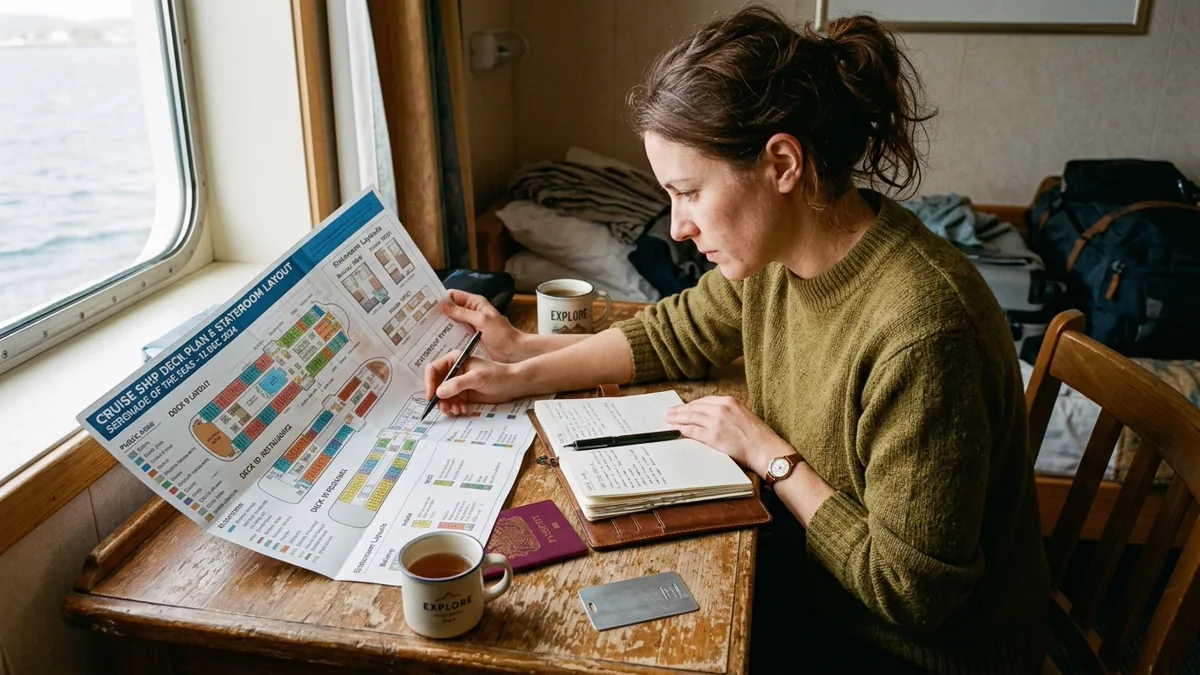
Before confirming your stateroom number, carefully study the ship deck plans directly above and below your prospective cabin. A tranquil stateroom relies on having residential passenger decks both above and beneath your ceiling and floor.
One of the most common stateroom selection mistakes is booking a top-deck balcony situated directly beneath the resort pool deck or casual buffet. Early each morning, crew members drag heavy loungers across tile decking to clean surfaces, transmitting scraping noises straight into staterooms below. Similarly, cabins located directly above the main theater stage or late-night nightclub venues encounter bass vibration through midnight.
Other potential noise zones include cabins adjoining passenger elevator lobbies, self-service laundry rooms, and service galley staging doors. Always aim to select a cabin buffered on all sides by fellow guest staterooms to guarantee quiet nighttime resting conditions.
What Are Guarantee Cabins and Automatic Stateroom Assignments?
When booking an ocean voyage, cruise lines typically present two reservation options: choosing an exact stateroom number from the active deck plan or selecting a guarantee cabin rate (often marked as GTY or Sailaway rates).
A guarantee booking ensures you will receive at least the minimum stateroom category booked (such as an inside, oceanview, or balcony) at a discounted price, but the cruise line automated inventory algorithm assigns your exact cabin number shortly before departure. In some instances, travelers receive complimentary upgrades to higher deck tiers or superior stateroom categories if lower-tier inventory sells out.
However, the trade-off is relinquishing control over your stateroom placement. The cruise line may assign your cabin in the extreme forward bow, directly above a noisy venue, or in a partially obstructed balcony location where lifeboats block portions of the ocean view. If stateroom deck position, midship stability, or adjoining family cabins are essential to your vacation peace of mind, paying a modest premium to hand-pick your specific cabin number is well worth the investment.
Cruise Ship Stateroom Category Comparison Matrix
To assist in your stateroom decision, this comparison table details the key features, relative pricing tiers, and ideal passenger fit across primary stateroom categories.
| Stateroom Category | Typical Interior Size | Natural Light & Air | Price Position | Optimal Passenger Match |
|---|---|---|---|---|
| Inside Cabin | 140 to 180 sq ft | None (Virtual screen on some ships) | Lowest (Base rate) | Budget travelers, solo explorers, active cruisers |
| Oceanview Cabin | 160 to 200 sq ft | Porthole or picture window | Low to Moderate (+15% to 25%) | Guests wanting daylight without veranda expenses |
| Balcony Stateroom | 180 to 220 sq ft (+ veranda) | Floor-to-ceiling glass sliding door | Moderate (+40% to 60%) | Couples, scenic route travelers, relaxation seekers |
| Mini-Suite / Suite | 300 to 1,200+ sq ft | Expansive veranda & panoramic windows | Premium (+100% to 300%+) | Families needing space, milestone celebrations |
Common Cabin Booking Misconceptions and Operational Truths
Navigating stateroom selection involves dispelling several common myths surrounding cabin classes and shipboard comfort.
Misconception: Higher deck staterooms are always superior because they are closer to the swimming pools.
Operational Truth: While top-deck cabins offer rapid access to open-air sundecks, they experience considerably more roll and pitch during turbulent sea conditions compared to lower and middle passenger decks situated near the vessel natural center of gravity.
Misconception: Guarantee cabin bookings are guaranteed to receive massive upgrades to luxury suites.
Operational Truth: While cabin upgrades do occur, the vast majority of guarantee reservations simply receive an assignment within the exact category tier purchased, frequently in less desirable hull locations that remained unselected by other guests.
How we researched this: Our stateroom selection evaluations analyze naval architecture stabilization models, cruise line deck schematics, passenger acoustic surveys, and verified stateroom inventory algorithms to provide objective, practical booking guidance.
Common Inquiries on Stateroom Selection
Which cabin on a cruise ship is least prone to motion sickness?
A midship stateroom located on a lower or middle passenger deck (such as Decks 4 through 6) offers the most stable ride. This location sits nearest to the ship center of rotation and hull stabilization systems, significantly minimizing roll and pitch sensations.
What is an obstructed view balcony cabin?
An obstructed view cabin is a stateroom where exterior ship equipment, such as emergency lifeboats, davits, or maintenance cranes, partially blocks the outward sightline. These cabins are sold at discounted rates and clearly noted on cruise line booking engines.
Are electrical outlets plentiful inside cruise ship staterooms?
Older vessels typically feature only one or two standard 110V North American electrical outlets and European plugs at the vanity desk. Modern ships built after 2020 feature multiple USB ports and bedside charging outlets. Always verify that power adapters comply with cruise line non-surge guidelines.
Can cruise lines reassign my selected stateroom number after booking?
When you pay to select a specific stateroom number, cruise lines will almost never move you without your consent, except in rare instances of technical maintenance, drydock cabin reconfiguration, or emergency quarantine requirements.