
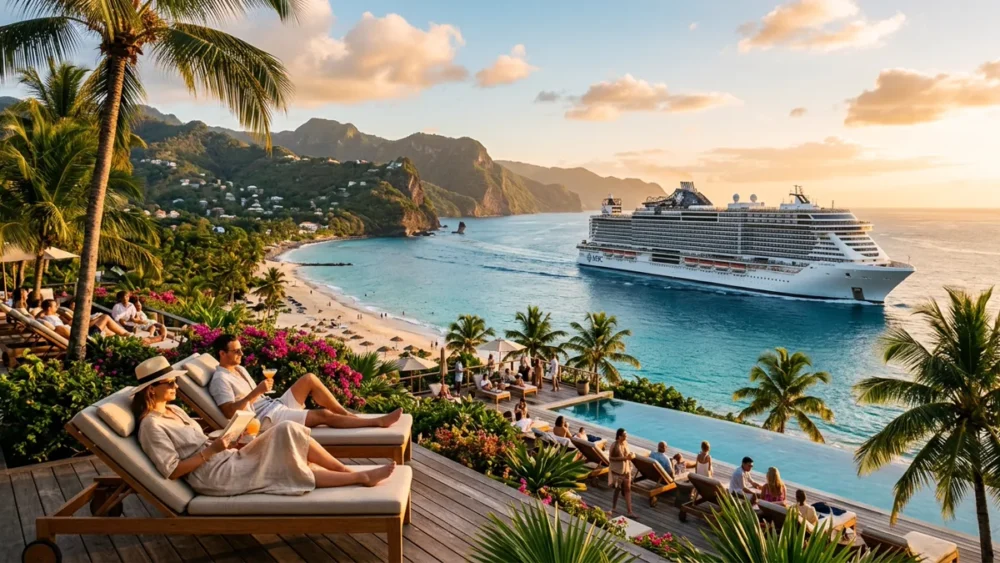
Boarding pass: When comparing a cruise vs all inclusive vacation, the key differences lie in pricing structure and travel rhythm. Cruises deliver multi-destination island hopping with lower starting fares, but charge extra for drinks, excursions, and daily tips. All-inclusive resorts provide unlimited food and cocktails on sprawling private beaches for one predictable upfront cost.
How Do Ocean Cruises and Land Resorts Differ?
Planning a tropical getaway often comes down to one core debate: booking a floating resort that visits multiple islands or settling into a stationary beachfront property. Both travel models provide lodging, food, and recreational amenities. Yet the guest experience feels fundamentally distinct from day one.
A cruise is dynamic. You unpack your suitcase once and awaken in a new tropical harbor every morning. You might swim with stingrays in Grand Cayman on Tuesday, explore Mayan ruins in Cozumel on Wednesday, and snorkel coral reefs in Roatán on Thursday. For route ideas, check our breakdown of eastern vs western caribbean cruise itineraries.
An all-inclusive resort is stationary. You arrive at a single private compound in Cancun, Punta Cana, or Montego Bay and remain on property for the duration of your stay. The atmosphere is unhurried. Guests encounter no gangway departure times, no ship tenders to board, and no strict port schedules to monitor.
Each style has devoted fans. Selecting the best match depends heavily on your budget structure, desired activity level, and appetite for island hopping.
What Is the Real Cost Per Night Between Both Options?
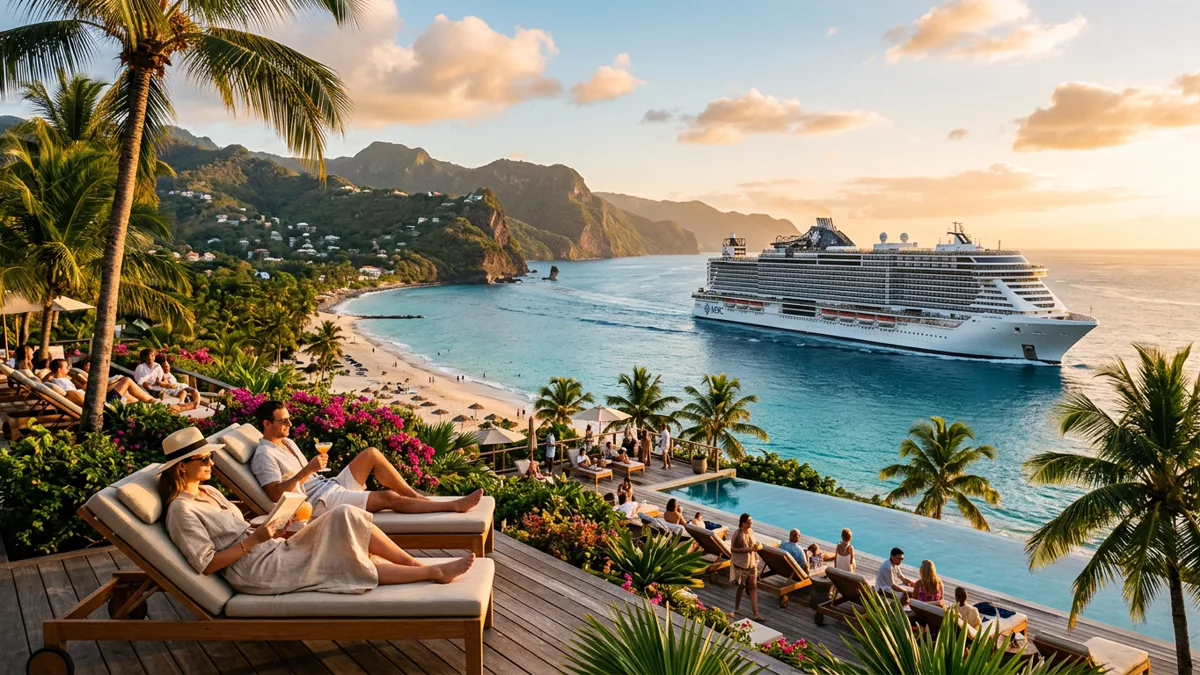
Comparing prices directly on travel search portals can be misleading. Mainstream cruise lines often advertise eye-catching base fares starting around $100 to $150 per person per night. However, standard cruise fares cover only lodging, basic buffet and main dining room meals, and select non-alcoholic drinks.
All-inclusive resorts display higher upfront sticker prices, typically ranging from $250 to $600 per person per night. However, that nightly rate includes unlimited à la carte dining, premium cocktails, beer, wine, non-motorized water sports, airport ground transfers, and resort gratuities.
To evaluate the true fiscal comparison, consider the real out-of-pocket expenses for a 7-night Caribbean vacation for two adults:
| Expense Category | Mainstream Cruise (Balcony) | Mid-Tier All-Inclusive Resort |
|---|---|---|
| Base Fare / Room Rate | $2,200 ($157/person/night) | $3,800 ($271/person/night) |
| Beverage Package / Drinks | $1,120 ($80/person/day + 18%) | Included in base rate ($0) |
| Daily Service Charges | $252 ($18/person/day) | Included in base rate ($0) |
| Specialty Dining / Snacks | $300 (2 specialty dinners) | Included in base rate ($0) |
| Excursions / Activities | $500 (2 port excursions) | $200 (optional off-site tour) |
| High-Speed Wi-Fi (2 devices) | $280 ($20/device/day) | Included across resort ($0) |
| Estimated Total Trip Cost | $4,652 | $4,000 |
Surprises happen on ships. When you factor in drink packages, mandatory cruise gratuities, specialty dining fees, and paid shore tours, the final bill on a mainstream cruise line like Royal Caribbean often equals or exceeds the total cost of a premium land resort.
Which Option Delivers Superior Dining and Beverage Inclusions?
Culinary standards and drink access represent two critical factors in overall vacation satisfaction. Both vacation formats invest heavily in gastronomy, but their operational systems differ.
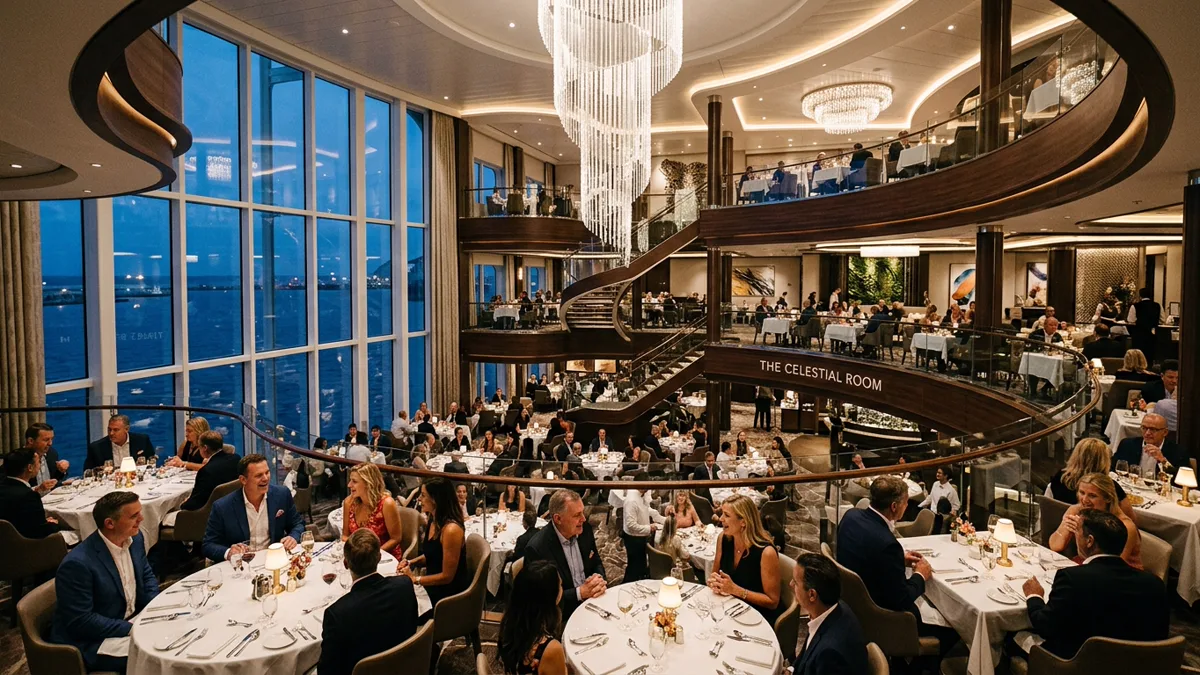
On mainstream cruise lines, your base fare covers the buffet, the multi-course Main Dining Room, and casual grab-and-go spots like poolside pizza and soft-serve ice cream. The food quality in main dining rooms is remarkably consistent. However, premium steakhouses, sushi bars, and celebrity-chef venues carry cover charges ranging from $45 to $90 per person.
Beverage rules on cruise ships are strict. Base fares include tap water, regular iced tea, standard drip coffee, and select breakfast juices. Cocktails, beer, soda, and specialty espresso drinks cost extra unless you buy an expensive beverage package. Lines enforce strict limits preventing guests from bringing outside alcohol on board.
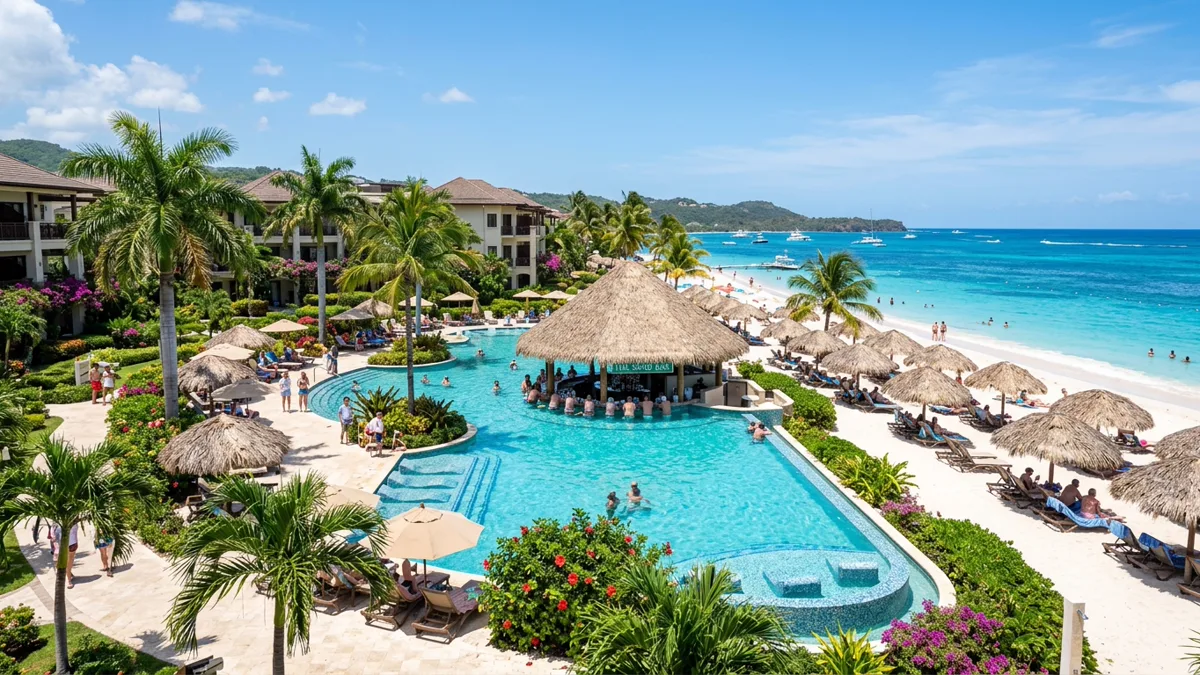
In contrast, reputable resort brands like Sandals Resorts and Secrets include full access to four to ten specialty restaurants without additional cover charges. Steakhouses, hibachi tables, and authentic regional cuisines are part of the standard package. In addition, open bars serve unlimited cocktails, draft beer, and house wines around the clock, while in-room minibars are restocked daily at no extra charge.
Quality matters across both formats. Top-tier luxury cruise lines match land resorts in gourmet cuisine, but mass-market cruise ships increasingly reserve their best dining venues behind paywalls. Travelers who prioritize limitless tropical cocktails and diverse specialty dining without constant card-swiping often favor the simplicity of the all-inclusive resort model.
How Do Accommodations and Living Spaces Compare?
Living space is one of the clearest differentiators between cruise vessels and beachfront hotels. Marine architecture prioritizes efficient space utilization, resulting in compact staterooms.
A standard balcony cabin on a modern cruise ship averages 180 to 220 square feet, including the private veranda. Bathrooms are notoriously compact, featuring molded acrylic step-in shower stalls. Storage is cleverly designed with under-bed suitcase space and built-in wardrobes, but floor space remains tight for families sharing a single room.
At an all-inclusive resort, standard entry-level guest rooms typically measure 450 to 650 square feet. Rooms feature expansive king-sized beds, spacious sitting lounges, double-sink marble vanities, soaking tubs, walk-in rain showers, and large outdoor terraces equipped with daybeds or private plunge pools.
Spacious rooms provide comfort. For vacationers who spend substantial time relaxing inside their room, resorts offer unmatched spaciousness. For guidance on seasonal weather patterns when booking resort or cruise dates, review the best time to cruise Caribbean calendar.
Which Setting Offers Better Entertainment and Relaxation?
Entertainment on large cruise ships is world-class. Mega-ships feature Broadway-caliber musical productions, high-diving aquatic acrobatics, professional ice skating revues, comedy clubs, and bustling casino floors. During sea days, ships provide surf simulators, multi-story waterslides, zip lines, and laser tag arenas.
Cruises are energetic. The sheer variety of programming means you will never feel bored. However, public pool decks on sea days can feel lively and loud, with energetic DJ music and chair hogging around prime loungers.
All-inclusive resorts cultivate a more relaxed, laid-back atmosphere. Daily activities focus on beach volleyball, paddleboarding, yoga on the pier, and lounging beside tranquil infinity pools. Evening entertainment features live beach bands, acoustic sets, fire dancing, and local cultural performances. The overall rhythm is calm and uncrowded, making resorts ideal for reading, unwinding, and recharging mental energy.
Which Vacation Style Fits Your Travel Party?
The right choice depends on whether your travel party prefers dynamic sightseeing across multiple islands or stationary relaxation on a single private beach. Active explorers and multi-generational families thrive on cruise ships, while couples seeking unhurried rest and predictable billing prefer all-inclusive resorts.
Choose a cruise when:
- You love visiting multiple countries and varied island cultures during a single week of travel.
- You value high-energy Broadway-style theatrical shows, live comedy, and energetic casino gaming.
- You are traveling with multi-generational family groups who require wildly diverse age-specific entertainment under one roof.
- You want a structured itinerary with daily scheduled activities and organized shore excursions.
Choose an all-inclusive resort when:
- You want total budget certainty without tracking daily add-on purchases, folio tips, or drink limits.
- Your main goal is pure rest, quiet beach time, and unhurried pool days with a cocktail in hand.
- You prefer spacious luxury hotel suites with generous marble bathrooms and private balconies.
- You want to avoid sea motion, gangway queues, and tight departure deadlines.
Pack smart regardless of your choice. Ensure you assemble versatile resort wear and sun essentials using our complete cruise packing list and explore our dedicated ports and resorts travel guides.
Cruise vs All Inclusive FAQ
Is a cruise cheaper than an all-inclusive resort for families?
Cruises often feature lower initial cabin fares, but once you add mandatory gratuities, soda packages, specialty dining, Wi-Fi, and shore excursions, the total cost for a family of four is often very similar to a family-friendly all-inclusive resort in the Caribbean or Mexico.
Do all-inclusive resorts include airport transfers and tips?
Most reputable all-inclusive brands include shared round-trip airport ground transportation and all resort tipping in their advertised rates. Always verify your specific resort booking confirmation details prior to arrival.
Can you get seasick at an all-inclusive resort?
No. Stationary land resorts eliminate motion sickness entirely. If you or your family members are prone to severe motion sensitivity, an all-inclusive land resort offers a worry-free vacation environment.
Which option offers better beach time?
All-inclusive beachfront resorts generally offer far more beach time because your hotel sits directly on the sand with 24/7 ocean access. On a cruise, beach access is limited to port calls, typically lasting six to eight hours per stop.
How we researched this: Price comparisons, amenity inclusion schedules, and dining parameters are compiled from published 2026 tariff guides across Royal Caribbean, Carnival, Norwegian, Sandals Resorts, Secrets Resorts, and Hyatt Inclusive Collection.