
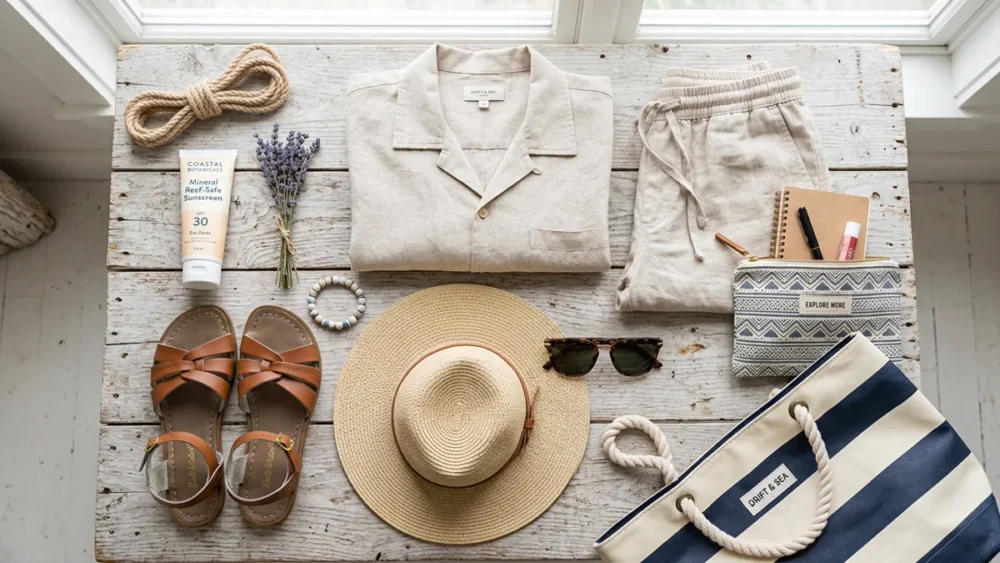
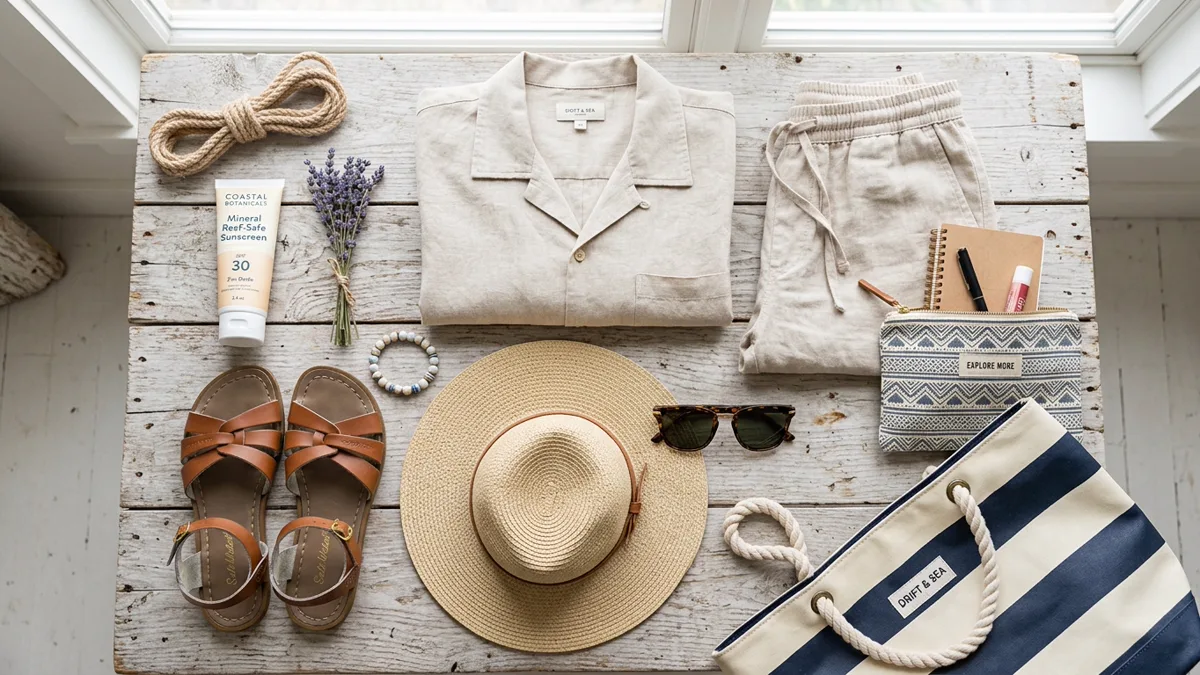
Boarding pass: A complete beach vacation packing list balances sun protection, breathable linen fabrics, reef-safe toiletries, and versatile footwear. Essential gear includes UPF 50+ rash guards, mineral zinc oxide sunscreen compliant with local environmental laws, polarized sunglasses, a waterproof dry pouch, and quick-dry swimwear suitable for both resort pools and island excursions.
How Should You Structure Your Beach Vacation Packing List?
Planning a tropical getaway requires balancing clothing comfort with environmental readiness. Unlike standard city vacations where forgotten items can be purchased around the corner, secluded island beaches and remote resort enclaves often have limited shopping options with inflated tourist prices.
A well-organized beach vacation packing list separates your gear into functional tiers: daytime sun protection, breathable resort wear, water excursion gear, and evening dining attire. Structuring your luggage by activity prevents overpacking heavy garments you will never wear under intense tropical heat.
Travel light whenever possible. High humidity means heavy denim and synthetic polyester feel stifling within minutes. By focusing on lightweight natural fibers, modular layering pieces, and versatile footwear, you can comfortably pack for a full week of beach relaxation inside a single carry-on bag.
For additional clothing advice tailored to cruise ship decks and port days, explore our curated guide on what to wear on a cruise.
What Sun Protection Gear Belongs in Your Beach Bag?
Preparing for a coastal getaway requires strategic planning against intense tropical UV radiation. Sun intensity near the equator is significantly higher than in northern latitudes. Standard summer clothes often fail to block harmful rays adequately during extended beach afternoons.
Pack UPF-rated garments. Clothing certified with Ultraviolet Protection Factor (UPF 50+) blocks 98% of UVA and UVB rays, even when wet. Long-sleeve rash guards, lightweight hooded sun shirts, and UV swim leggings prevent painful sunburns without requiring constant lotion reapplication according to research by the Skin Cancer Foundation.
Eye protection is equally critical. Polarized sunglasses with UV400 lenses filter blinding glare reflecting off white sand and turquoise water. Pair your sunglasses with a wide-brim straw hat or a packable nylon sunhat featuring a chin strap for breezy shorelines.
Keep your face shaded. Broad-brimmed hats protect the delicate skin on your nose, ears, and neck from cumulative sun damage while keeping you cool during midday walking tours.
Which Fabrics and Outfits Excel for Tropical Getaways?
Tropical humidity demands lightweight, breathable textiles that release body heat and dry rapidly after unexpected rain showers or ocean dips. Natural linen, organic cotton gauze, and moisture-wicking synthetic blends are the premier choices for warm-weather itineraries.
Linen provides natural temperature regulation. Loose linen button-downs, draw-string trousers, and airy sundresses transition seamlessly from poolside loungers to upscale evening restaurants. For versatile style tips comparing resort stays with ocean voyages, review our cruise vs all inclusive analysis.
Follow a simple 3-swimsuit rule:
- One Sport Swimsuit: A secure one-piece or athletic swim trunk designed for snorkeling, paddleboarding, and active water excursions.
- One Relaxed Lounging Suit: A stylish bikini, tankini, or casual board short for sunbathing beside tranquil resort pools.
- One Backup Swimsuit: A dry spare ready while your other suits air-dry in your bathroom or veranda.
Always pack two lightweight sarongs or quick-drying kimono cover-ups. Many Caribbean resort lobbies and hotel cafes require guests to cover their swimsuits when stepping indoors.

Why Is Mineral Reef-Safe Sunscreen Legally Required in Coastal Destinations?
When selecting skincare products for your beach trip, environmental legislation plays a major role. Many popular coastal destinations strictly enforce environmental bans on chemical sunscreen ingredients like oxybenzone and octinoxate, which cause severe coral bleaching and damage marine ecosystems.
Regulatory compliance is mandatory in several jurisdictions. For example, Hawaii Act 104 (effective January 1, 2021) legally bans the sale and distribution of sunscreens containing oxybenzone and octinoxate across the Hawaiian islands as detailed by the Hawaii Department of Land and Natural Resources. Similar strict bans are enforced in the U.S. Virgin Islands, Palau, Bonaire, Aruba, and Mexico’s Riviera Maya eco-parks.
Ensure your sunscreen uses non-nano zinc oxide or titanium dioxide as the sole active mineral blockers. Mineral sunscreens sit on top of the skin rather than absorbing into bloodstreams, delivering broad-spectrum protection that is safe for delicate coral reefs.
Coastal travelers should also monitor seasonal ocean patterns. If you are traveling during peak algae blooms, read our detailed guide on navigating sargassum season across Caribbean shorelines.
Which Footwear Options Handle Sand, Coral, and Pavements?
Tropical vacations demand functional footwear suited for scalding sand, slippery pool tiles, rocky shorelines, and cobblestone port towns. Packing the wrong shoes leads to blisters and ruined excursions.
Recommended footwear categories include:
- Sturdy Water Shoes: Neoprene or mesh aquatic shoes with rugged rubber soles protect feet from sharp coral fragments, sea urchins, and slippery submerged rocks during shore adventures.
- Supportive Walking Sandals: Waterproof leather or EVA sandals with arch support provide all-day comfort during harbor walking tours and shopping districts.
- Poolside Flip-Flops: Lightweight rubber slides protect feet on scorching midday pool decks and beach boardwalks.
- Evening Resort Shoes: Dressy leather sandals, boat shoes, or breathable espadrilles for evening dinners and cocktail lounges.
Keep footwear organized in designated nylon shoe cubes inside your luggage to keep beach sand separated from clean evening garments.
How Do You Protect Electronics and Valuables Near Salt Water?
Salt water, fine quartz sand, and sudden tropical downpours present serious hazards for smartphones, cameras, and electronic accessories. Investing in proper protective gear prevents costly device damage.
Pack a 10-liter or 20-liter roll-top waterproof dry bag. Dry bags keep your dry change of clothes, camera, wallet, and beach reads completely shielded from splashing waves on catamaran excursions and tender boat rides.
Equip your smartphone with an IPX8-certified clear waterproof phone pouch on a sturdy neck lanyard. These pouches allow touch screen operation underwater for capturing shallow snorkeling photos while keeping charging ports free from corrosive salt residue.
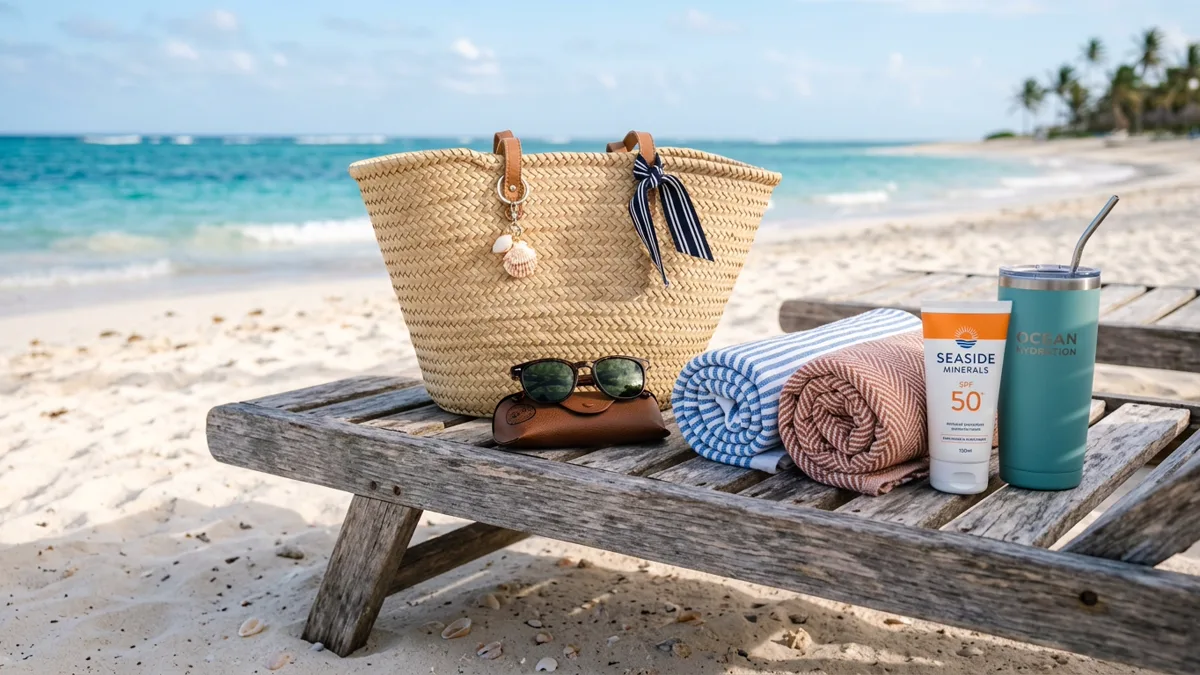
Carry a sand-free microfiber or Turkish beach towel. Unlike heavy terry-cloth hotel towels, Turkish towels shake off sand effortlessly, roll up tightly in daypacks, and dry within 20 minutes under gentle sea breezes.
Bring portable power banks. High screen brightness outdoors and extensive photo shooting quickly drain smartphone batteries during full-day island excursions. A compact 10,000 mAh external battery ensures your phone stays charged for navigation and evening photos.
Complete Tropical Beach Packing Checklist by Category
Luggage space is valuable. Packing intentionally ensures you have the exact right balance of clothing and sun defense without hauling oversized luggage across airline terminals and resort lobbies.
Use the structured table below to audit your luggage before departure. For ocean voyage travelers, this checklist pairs directly with our master cruise packing list and our packing and outfits collection.
| Item Category | Essential Packing Items | Recommended Quantity |
|---|---|---|
| Beach Apparel | Linen shirts, sundresses, quick-dry shorts, UPF 50+ rash guards | 4 to 6 day outfits, 3 swimsuits |
| Sun Protection | Mineral reef-safe sunscreen (SPF 30+), wide-brim hat, UV sunglasses | 2 lotion bottles, 1 hat, 2 pairs |
| Footwear | Water shoes with grip, walking sandals, waterproof flip-flops | 3 pairs total |
| Waterproof Gear | Roll-top dry bag (10L), IPX8 phone pouch, mesh snorkel bag | 1 dry bag, 2 pouches |
| Beach Amenities | Sand-free Turkish towel, insulated water tumbler, towel clips | 2 towels, 1 tumbler, 4 clips |
| First Aid & Skincare | Pure aloe vera gel, lip balm with SPF, bug spray (DEET or Picaridin) | 1 travel kit |
Double-check luggage tags before heading to the departure terminal. Packing intentionally ensures you spend less time hunting for overpriced tourist sundries and more time enjoying pristine white sands and serene ocean sunsets.
Beach Vacation Packing FAQ
How many swimsuits should you pack for a 7-day beach vacation?
Packing three swimsuits is optimal for a one-week beach vacation. This allows you to rotate between active water sports, relaxing pool lounging, and always having a completely dry backup suit ready each morning.
What makes sunscreen reef-safe?
Reef-safe sunscreen uses non-nano zinc oxide or titanium dioxide as active ingredients and excludes harmful chemicals like oxybenzone, octinoxate, and octocrylene that damage delicate coral reefs.
Should you pack beach towels from home?
Most resorts and cruise ships provide complimentary beach towels. However, packing a lightweight, sand-free Turkish towel is highly recommended for independent port excursions and secluded off-property beaches.
What is the best way to clean sand out of luggage and clothes?
Shake garments thoroughly on the beach before returning to your room. Use baby powder or cornstarch to easily brush stubborn, damp sand off skin and feet before stepping onto hotel carpets.
How we researched this: Sun safety recommendations, fabric performance metrics, and marine environmental regulations are compiled from the National Oceanic and Atmospheric Administration (NOAA), Hawaii Department of Land and Natural Resources, and the Skin Cancer Foundation as of October 2026.